


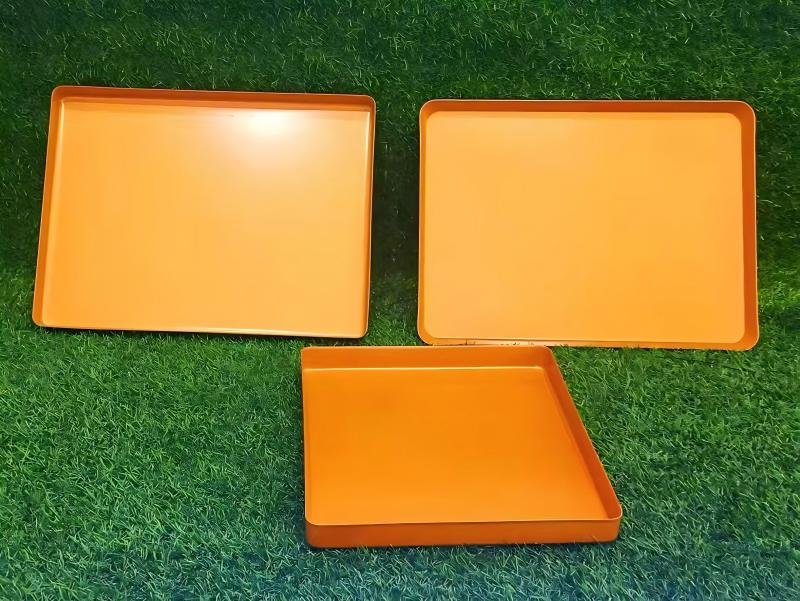
Are you losing money with every bake? The wrong pan shape1 wastes precious oven space and can lead to inconsistent products. Let’s fix that by choosing the right tool for the job.
For maximum production efficiency2 and space utilization, square baking pans3 are superior. They can increase your oven’s capacity by 15-20%. However, for products requiring perfectly even heat distribution4, like delicate cakes, round pans often yield better quality results. The best choice depends on your product mix.
I’ve seen this debate play out in countless bakeries over my years in this business. The choice isn’t just about looks; it’s a strategic decision that impacts your entire operation, from the oven to the storage rack. It really comes down to a few key questions about what you value most. Let’s break it down further so you can make the best decision for your bakery.
Which Industrial Baking Pan Shape Gives You a Better Return on Investment?
Is your bakery layout costing you? Inefficient pans waste valuable oven and shelf space, directly cutting into your profits. Let’s compare the real cost and return of each shape.
Square pans offer a significantly better return on investment5 for high-volume production. They utilize oven space more efficiently, increasing batch sizes by up to 20%. Their simpler manufacturing process6 also makes them 20-30% cheaper to produce and purchase than their round counterparts.
In the baking industry7, efficiency is profit. This is most obvious when we talk about space and cost. When I walk through our factory, the economic difference between pan shapes is crystal clear. Let’s dive deeper into how this affects your bottom line.
Maximizing Your Oven Real Estate
Your oven is your primary production engine. Wasting space inside it is like turning down free money. Square and rectangular pans fit together like tiles. You can place them edge-to-edge in a large commercial deck oven with almost zero wasted space. This simple geometric advantage means you can bake 15-20% more product in the same amount of time. I always feel a pang of regret when I see the large, empty gaps between round pans in a busy production oven.
The Hidden Costs of Baking Trays Manufacturing
From our perspective as a manufacturer, square pans are just simpler and cheaper to make. The process involves cutting, bending, and welding sheet metal. It’s straightforward and has a very low scrap rate. Round pans, on the other hand, require a process called deep drawing, which stretches a single piece of metal into the pan shape. This is technically much more difficult, requires specialized equipment, and has a higher failure rate. That complexity and waste gets passed on, making round pans 20-30% more expensive right from the start.
Storage and Workflow Efficiency
The advantage of square pans continues right to your storage racks.
| Feature | Square Pans | Round Pans |
|---|---|---|
| Oven Space Use | Excellent (up to 20% more) | Poor (significant wasted space) |
| Stacking & Storage | Stable, space-saving | Unstable, bulky |
| Purchase Cost | Lower (20-30% cheaper) | Higher |
Square pans stack neatly and securely, maximizing your shelf space. Round pans are awkward to stack; they can slide and are not space-efficient. A well-organized kitchen is a fast kitchen, and square pans help achieve that.
Does Pan Shape Really Affect How Your Products Bake?
Are you frustrated by unevenly baked products? Burnt edges and undercooked centers can be a constant headache. The shape of your pan dramatically affects heat distribution4 and final quality.
Yes, pan shape is critical. Round pans promote even heat circulation, preventing corners from over-baking. This is ideal for delicate cakes, cheesecakes, and pizzas. Square pans have corners where heat concentrates, which can lead to drier, darker edges if not managed properly.
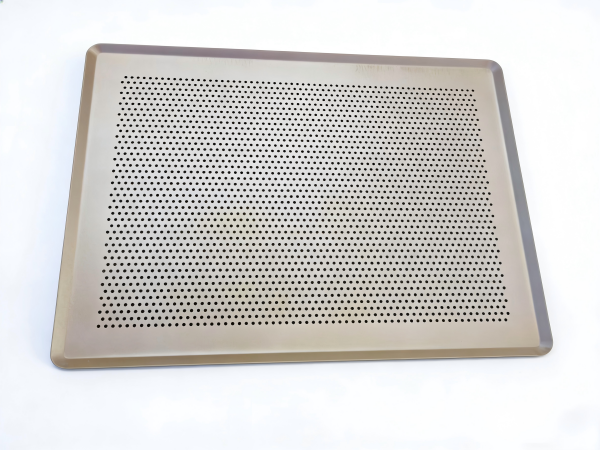
While square pans win on production volume, round pans often win on product quality. The final choice depends entirely on what you are baking. I have clients who swear by one or the other, and they are both right. It’s a matter of matching the tool to the specific task at hand.
The Science of Even Baking
Think about how heat moves in an oven. It flows from the edges of the pan inward. In a round pan, the distance from any point on the edge to the center is always the same. There are no corners. This creates a very gentle, even bake. Heat is absorbed uniformly across the entire batter. This is why one of my clients, who runs a high-end private bakery specializing in custom cakes, will only use our round pans. Her quality and consistency are incredible, and the pan shape is a big part of her success. For any product where a uniform texture and color are critical, round is the way to go.
When Corners Are a Good Thing (and When They’re Not)
Square pans are a different story. Heat gets trapped and concentrated in the four corners. This means the corners cook much faster than the center of the pan. For some products, this is a feature, not a bug! Think about brownies or a sheet of focaccia. Many people love those crispy, chewy corner pieces. The textural contrast is desirable. But for a delicate sponge cake or a creamy cheesecake, it can be a disaster. You risk getting dry, cracked, and over-baked edges long before the center is properly cooked. You must know your product’s needs to avoid this.
Which Pan is Easier to Clean and Maintain in a Busy Kitchen?
Is pan cleanup slowing your kitchen down? Tough-to-clean corners and awkward storage add to labor costs and frustration. Let’s compare which pan shape simplifies your daily workflow.
Square pans are generally easier to clean and maintain. Their straight sides and 90-degree corners are more accessible for scrubbing. They also stack securely, which saves valuable storage space and reduces the risk of damage from falling.
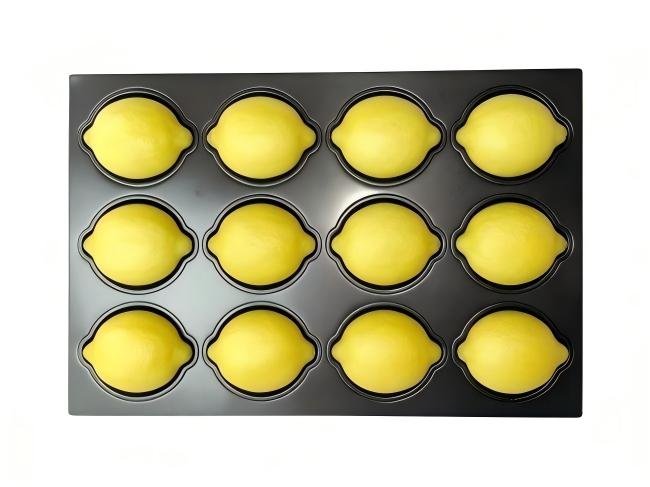
In a high-volume bakery, the time spent on tasks other than baking is time you’re not making money. Cleaning, maintenance, and storage might seem like small things, but they add up. The design of your bakeware has a direct impact on these operational chores.
The Daily Grind of Cleaning
When the day is done and it’s time to wash up, your team will thank you for choosing square pans. The straight lines and defined corners are easy to get into with a sponge or brush. This ensures no food residue gets left behind, which is a critical point for hygiene and HACCP compliance. Round pans often have a curved edge where the wall meets the base. This small curve can be a trap for baked-on grease and batter, requiring extra time and effort to clean properly. In a busy kitchen where every minute counts, this difference is significant.
Stacking for Safety and Durability
We already talked about storage efficiency8, but let’s look at it from a safety and maintenance angle. Square pans stack like bricks. They create a stable, secure block on your shelf. I have seen, more than once, a tall, wobbly stack of round pans slide and crash to the floor. This is not only a mess and a safety hazard but also a great way to dent and damage your expensive pans. A stable stack is a safe stack. The simpler construction of square pans also means there are fewer stress points, which can contribute to a longer lifespan, especially for the non-stick coating, in a very demanding environment.
Conclusion
In short, choose square pans for volume and efficiency, and round pans for premium quality. Smart bakers use both to maximize profit and please every customer.
-
Explore the critical role of pan shape in achieving desired baking results. ↩
-
Find effective strategies to boost production efficiency and profitability in your bakery. ↩
-
Explore how square baking pans can enhance your baking efficiency and maximize oven space. ↩
-
Explore the science behind heat distribution and its impact on baking quality. ↩ ↩
-
Understand the financial implications of choosing the right baking pans for your business. ↩
-
Gain insights into the manufacturing processes that affect the cost and quality of baking pans. ↩
-
Stay updated on the latest trends and innovations in the baking industry. ↩
-
Learn how to optimize your storage solutions for better workflow and space management. ↩